Zero-Trust Architecture for FinTech Applications
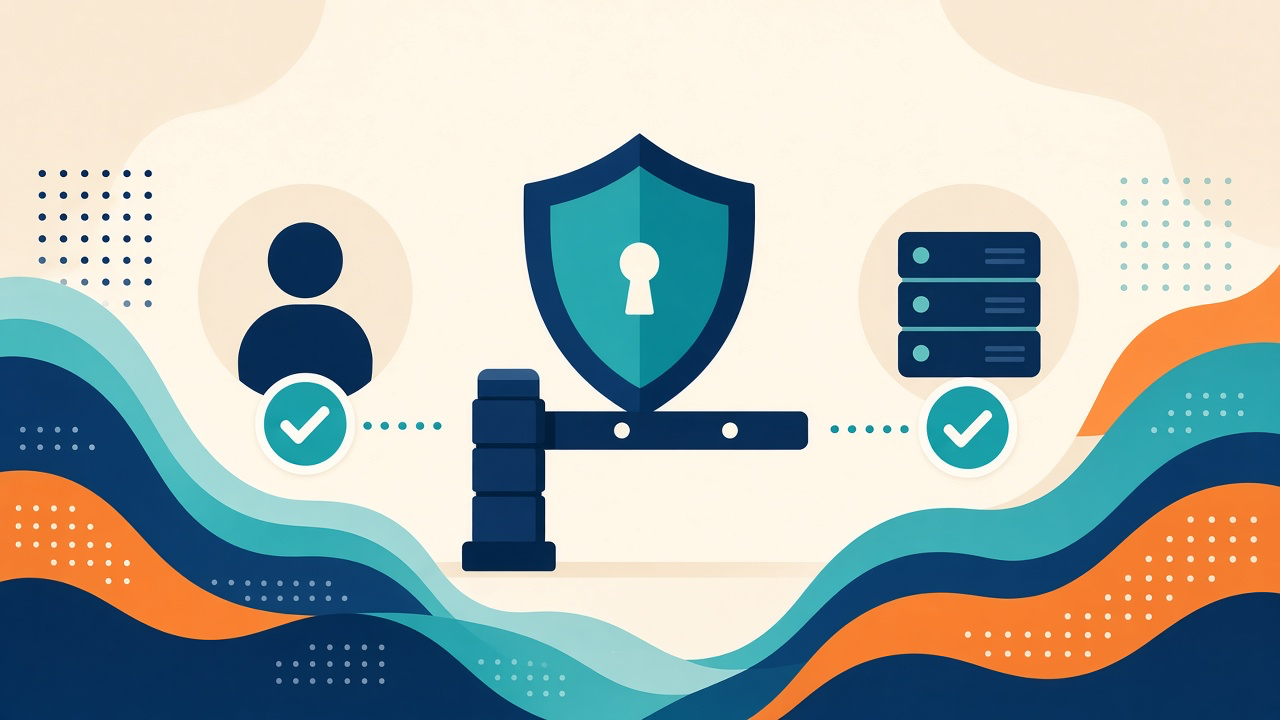
A VPN and a private subnet used to mean “inside, so it is allowed.” That model fails when staff work remotely, services call each other across accounts, and a single stolen token can read a ledger. Zero trust replaces location with checks: every request proves who it is, what it may do, and whether this call still looks normal.
For FinTech, the point is smaller blast radius around money and customer data, not a new product name on the firewall.
The Working Rules
Verify explicitly. User, service, and device where it matters. Authentication is not a one-time gate at login. Sensitive actions check again.
Least privilege. A service that posts ledger entries does not also get broad read access to every tenant. Humans get the role for the task in front of them, for as long as the task lasts.
Assume breach. Segment so a compromised app server cannot scan the database network or call the payout service just because it shares a VPC.
None of these require a single vendor platform. They require decisions in identity, network, and application code.
Where to Enforce It
User or service presents a credential
    ↓
Identity provider or workload identity verifies it
    ↓
Policy checks role, tenant, and action
    ↓
Service allows only that operation
    ↓
Sensitive step may require step-up auth or a second control
    ↓
Decision and actor are logged
The application is part of the boundary. A gateway that checks a token, then a service that trusts any caller on the private network, is not zero trust. The service must check the token, the audience, and the tenant on every request.
Service-to-service calls use workload identity (short-lived credentials), not a long-lived API key baked into a config file. Keys that never expire become the real perimeter, and they leak.
FinTech Flows That Need a Harder Check
- Moving money, changing a payout destination, or raising a limit
- Reading full account numbers or identity documents
- Admin actions across tenants
- Break-glass access to production data
- Access from a new device or an unusual location to an admin tool
Step-up authentication, maker-checker, or a just-in-time role belongs on these paths. Everyday balance display does not need the same friction. Apply the stronger check where the loss is real.
Segmentation That Matches the Domain
Put the ledger, card data environment, and general application on separate networks and separate credentials. An analytics job reads a controlled export or a replica with masked fields. It does not connect to the primary ledger with the application’s database user.
Admin tools sit behind their own identity policy, with device checks if you can support them, and with sessions that expire. Production data access is requested, time-bound, and logged. A shared “prod read” password is the opposite of this model.
What to Log
Every allow and deny for sensitive actions: actor, service, tenant, action, and reason. You cannot investigate a suspected token theft if success leaves no trace. Keep the logs where the application team cannot edit them after the fact.
Review standing privileges on a schedule. Roles accumulate. Zero trust decays into “everyone is an admin” unless someone removes access when the project ends.
A Practical Starting Point
- Inventory who and what can call the payout and ledger services.
- Replace shared keys with short-lived workload identity on those paths.
- Enforce tenant and role checks in the service, not only at the edge.
- Add step-up or maker-checker on changing payout destinations.
- Segment the database so the web tier is not on the same flat network.
That sequence reduces real exposure. A diagram of every future zone does not.
Conclusion
Zero trust in FinTech means no request is trusted because it came from inside the network. Identity, a narrow permission, and a log entry accompany every sensitive call, and a compromised service cannot reach the ledger just by being nearby.
Connect With Us
At KIS Technology, we help businesses transform their ideas into secure and scalable digital solutions through software development, API integration, and quality engineering.
Build smarter. Build securely. Build for growth.
Connect with our Founder: