Why Reconciliation Matters in FinTech Applications
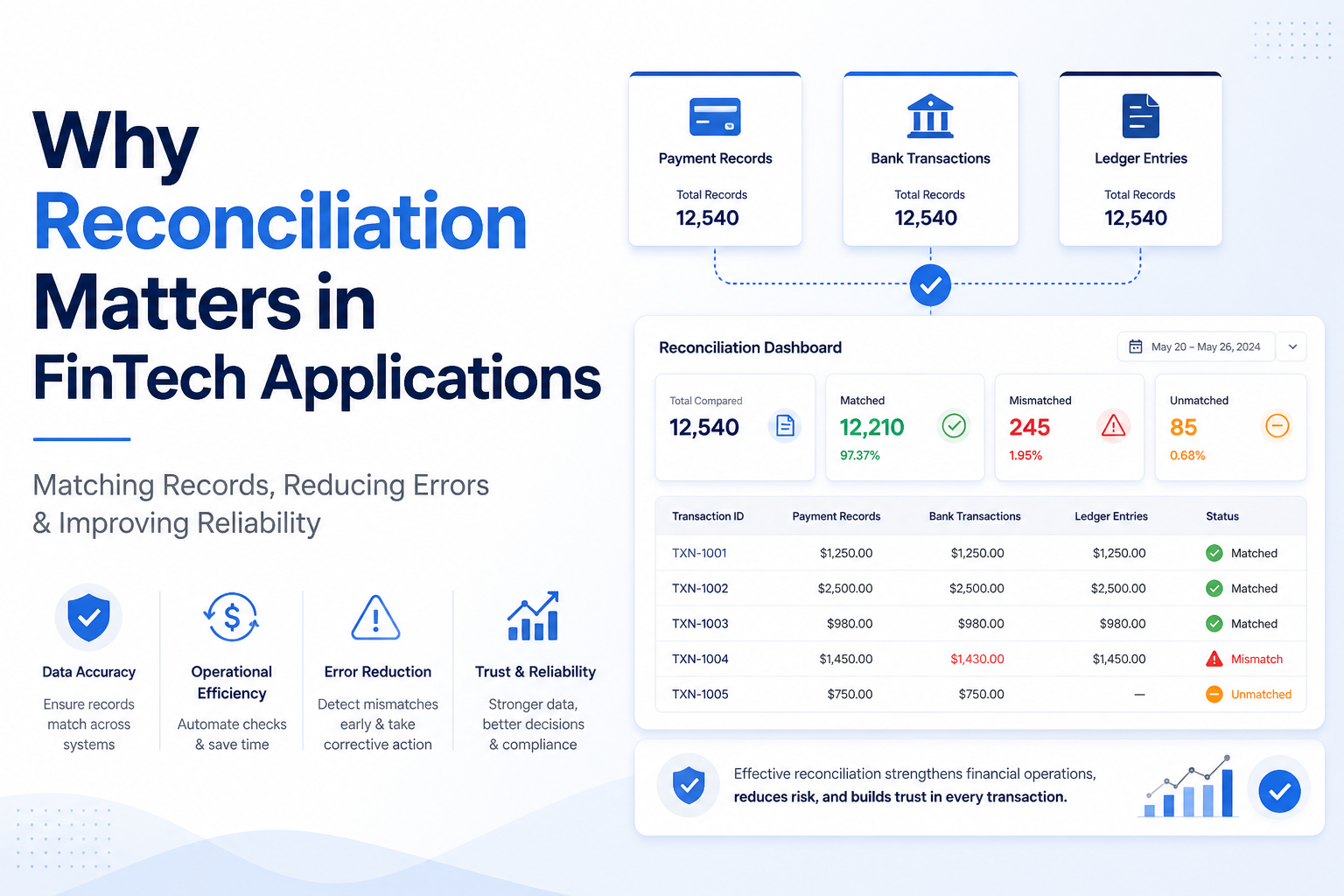
Reconciliation is one of the most important operational processes in a FinTech application. It helps businesses compare internal transaction records with data from banks, payment gateways, wallets, and other financial service providers.
Even when a transaction appears successful on the frontend, there can still be differences between what the customer saw, what the application recorded, and what the financial provider processed. Reconciliation helps identify these mismatches and correct them before they create larger issues.
What Is Reconciliation in FinTech?
In simple terms, reconciliation is the process of matching one financial record with another to make sure both sides agree.
For example, a FinTech platform may store a transaction as pending while a payment provider has already marked it as successful. In another case, the provider may show a failed or reversed transaction while the internal system still expects settlement.
This is why reconciliation becomes a critical control point for payment platforms, digital wallets, lending systems, and other financial products.
Why Reconciliation Matters
Strong reconciliation helps businesses:
- Detect missing or delayed updates
- Identify transaction mismatches
- Reduce settlement errors
- Support financial reporting
- Improve operational trust
Without reconciliation, a platform may continue to work with incomplete or incorrect transaction data. That can affect customer support, finance teams, reporting accuracy, and downstream workflows.
A Simple Reconciliation Flow
A common reconciliation process may look like this:
Application Transactions
          ↓
Provider or Bank Records
          ↓
Compare Status, Amount, and IDs
          ↓
Flag Mismatches
          ↓
Correct or Investigate
This helps teams find exceptions instead of assuming every transaction was processed exactly as expected.
Common Issues Reconciliation Can Catch
Reconciliation can help identify:
- Missing webhooks
- Duplicate transactions
- Incorrect status updates
- Settlement mismatches
- Failed refunds or reversals
These issues may not always be visible immediately in the customer interface, but they can create serious operational and financial problems if ignored.
Build Reconciliation into the Platform
Reliable FinTech systems often run reconciliation as a scheduled operational process. They compare transaction IDs, amounts, timestamps, and provider references, then push exceptions into review or correction workflows.
Audit logs, alerts, and clear exception handling make this process easier to manage as the business grows.
Conclusion
Reconciliation matters in FinTech applications because it helps keep financial records accurate and operations reliable. A strong reconciliation process reduces transaction risk, improves trust, and supports healthier long-term platform growth.
Connect With Us
At KIS Technology, we help businesses transform their ideas into secure and scalable digital solutions through software development, API integration, and quality engineering.
Build smarter. Build securely. Build for growth.
Connect with our Founder: