DPI Series Part 4: UPI Architecture and Secure Payment Flows
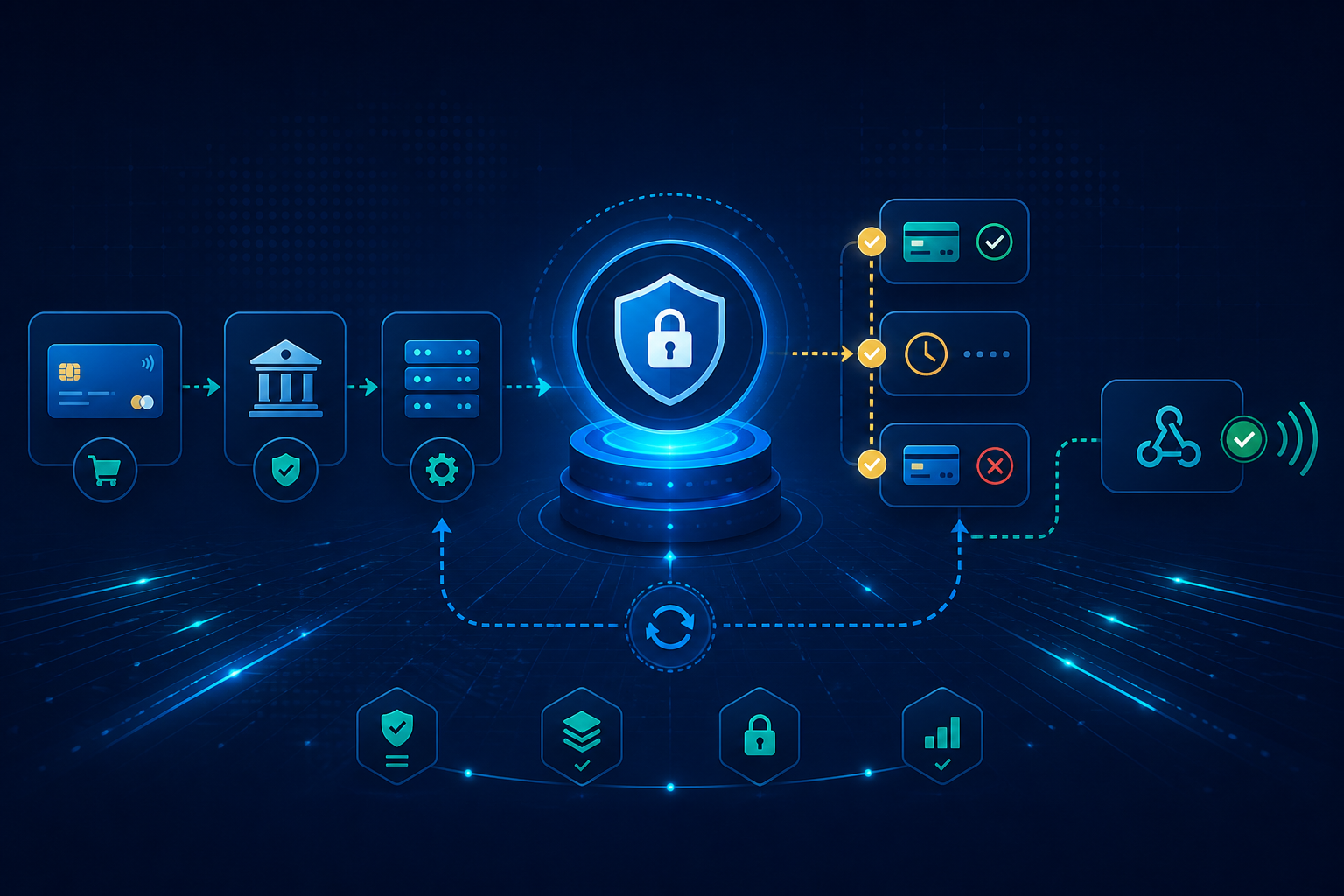
UPI is one of the most practical examples of India's Digital Public Infrastructure in daily use. It connects users, banks, payment apps, merchants, and national payment rails into a real-time payment experience that feels simple on the surface.
For engineers, UPI is useful to study because it shows how complex financial workflows can be designed around interoperability, security, reliability, and user trust.
Why UPI Matters in DPI
Digital Public Infrastructure is not only about identity. It is also about building reusable rails that many businesses, banks, and applications can use to serve people at scale.
UPI became important because it made bank-to-bank digital payments easier through:
- Interoperable payment apps
- Real-time transaction initiation
- Simple identifiers such as VPAs
- Bank account linking through trusted flows
- Merchant and peer-to-peer payment support
The engineering lesson is clear: infrastructure becomes powerful when different participants can safely interact through common rules and standard flows.
Key Participants in a UPI Flow
A UPI transaction involves multiple systems working together. A simplified view includes:
- The payer, who initiates the payment
- The payee or merchant, who receives the payment
- The payment app or PSP app, where the user starts the flow
- The payer bank, which debits the account
- The payee bank, which credits the account
- The central payment infrastructure that routes and coordinates the transaction
Even though the user may only see one app screen, the backend has to coordinate identity checks, account validation, transaction routing, authorization, response handling, and reconciliation.
A Simplified Payment Flow
Conceptually, a UPI payment flow can be understood like this:
- The user enters a VPA, scans a QR code, or selects a saved payee.
- The app prepares the payment request with amount, payer, payee, and transaction details.
- The user authorizes the payment through the required authentication step.
- The request moves through payment infrastructure to the payer bank.
- The payer bank validates and processes the debit.
- The payee bank receives the credit instruction.
- The final transaction status is returned to the app.
The important point is that payment systems must treat every state carefully. A transaction can be successful, failed, pending, reversed, timed out, or awaiting final confirmation.
Security Concepts Engineers Should Notice
Payment systems need strong security because they move money and sensitive account information. UPI teaches engineers to think about security across the full journey, not only at login.
Important concepts include:
- Strong user authorization before payment execution
- Secure communication between participating systems
- Transaction identifiers for traceability
- Limited exposure of sensitive banking details
- Monitoring for suspicious payment behavior
- Audit trails for disputes and investigation
Security in payment systems is not one feature. It is a combination of authentication, encryption, fraud checks, transaction controls, operational monitoring, and disciplined backend design.
Reliability and Failure Handling
One of the hardest parts of payment engineering is handling uncertainty. A user may lose network connectivity, a bank may return a delayed response, or a transaction may show pending before reaching a final state.
Good payment systems need to handle:
- Duplicate requests
- Timeout scenarios
- Pending transaction states
- Reversal and refund workflows
- Reconciliation between internal and bank records
- Clear user-facing status messages
This is where engineering discipline matters. The system should avoid double charging, avoid false success messages, and provide a clear way to recover from uncertain states.
Engineering Lessons from UPI
UPI shows that a large-scale payment system depends on much more than a clean user interface. The experience is simple because the underlying system handles routing, authorization, validation, failure recovery, and trust.
Engineers building FinTech products can learn from this model by focusing on:
- Clear API contracts
- Idempotent transaction handling
- Strong audit logs
- Secure customer journeys
- Real-time status visibility
- Reliable reconciliation processes
These ideas apply not only to UPI-based products, but also to wallets, payment gateways, lending platforms, accounting tools, and enterprise finance systems.
Conclusion
UPI is a strong example of how digital infrastructure can make financial services more accessible and efficient. For engineers, it is also a reminder that reliable payment systems require secure design, careful state management, and strong coordination across multiple participants.
The best payment experiences feel instant to users, but they are built on disciplined backend engineering.
Connect With Us
At KIS Technology, we help businesses transform their ideas into secure and scalable digital solutions through software development, API integration, and quality engineering.
Build smarter. Build securely. Build for growth.
Connect with our Founder: