DPI Series Part 1: Understanding India's Digital Public Infrastructure
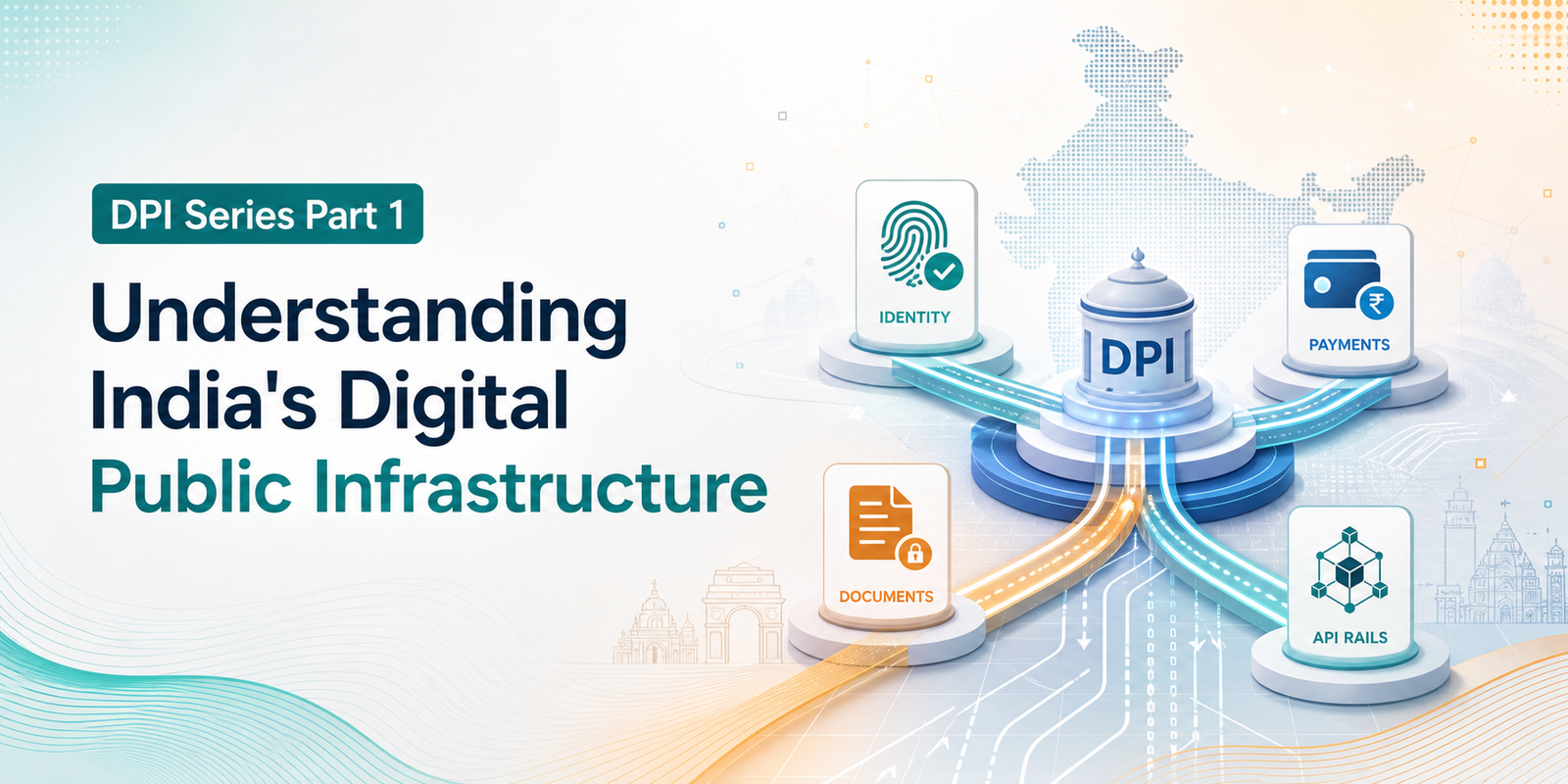
India's Digital Public Infrastructure, or DPI, is often discussed through products like Aadhaar, UPI, and DigiLocker. But for engineers, the bigger lesson is not only the product itself. It is the idea of building reusable digital rails that many services can depend on.
Instead of every platform creating identity, payments, or document exchange from scratch, DPI provides common building blocks that can support large-scale digital experiences.
What DPI Means
Digital Public Infrastructure is a set of shared technology layers that help different systems work together more efficiently.
In India's case, DPI is commonly understood through:
- Digital identity
- Payment rails
- Data sharing frameworks
- Public service integration
These layers make it easier for governments, banks, startups, and enterprises to build connected services.
Why Engineers Should Care
Engineers can learn an important platform lesson from DPI: strong foundational systems create faster innovation at the application layer.
When core infrastructure is reliable and standardized, teams can focus more on user experience, workflows, and business logic instead of rebuilding the same base capabilities again and again.
A Platform Thinking Mindset
India's DPI shows how APIs, trust frameworks, and interoperability can support digital scale across many use cases. That makes DPI valuable not only as policy infrastructure, but also as an engineering model for modern system design.
Conclusion
India's DPI teaches engineers how shared digital rails can unlock scale, consistency, and faster product innovation. Understanding this model is the first step to seeing how identity, payments, and trust frameworks work together in large digital ecosystems.
Connect With Us
At KIS Technology, we help businesses transform their ideas into secure and scalable digital solutions through software development, API integration, and quality engineering.
Build smarter. Build securely. Build for growth.
Connect with our Founder: