How to Build a Scalable E-commerce Platform
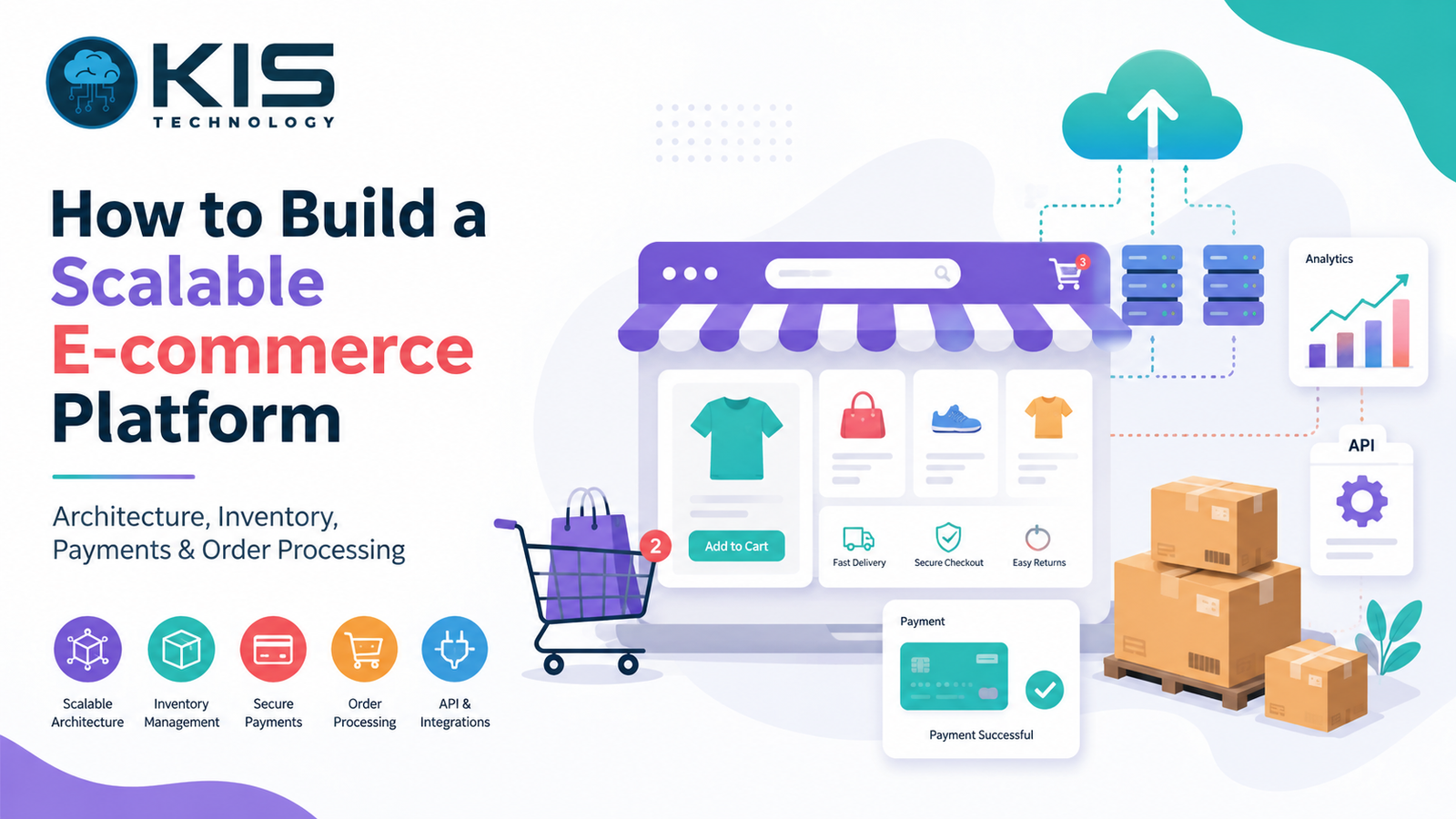
A successful E-commerce platform needs more than attractive product pages and a checkout button. As users, products, orders, and transactions increase, the platform must continue to perform reliably without slowing down.
Building for scalability from the beginning helps businesses handle growing traffic, manage inventory accurately, process orders smoothly, and integrate new services as requirements evolve.
What Makes an E-commerce Platform Scalable?
A scalable E-commerce platform can support increasing traffic and transactions without requiring the entire system to be rebuilt.
A typical architecture may look like:
Web / Mobile App
       ↓
     API Layer
       ↓
Backend Services
       ↓
 ┌─────┼─────┬─────┐
 ↓     ↓     ↓     ↓
Product Cart Order Payment
       ↓
Database / Cache
Keeping major business functions separate makes the platform easier to maintain and scale.
Product and Catalog Management
Product management is one of the core parts of an E-commerce platform.
The system should efficiently manage:
- Product information
- Categories
- Pricing
- Product variants
- Images
- Availability
- Search and filters
As the catalog grows, optimized database queries and caching can help product pages load quickly.
Inventory Management
Inventory accuracy is critical because multiple customers may try to purchase the same product at the same time.
A simple inventory flow can be:
Customer Checkout
       ↓
Check Availability
       ↓
Reserve Stock
       ↓
Create Order
       ↓
Update Inventory
Stock reservation and reliable database transactions help prevent overselling.
The platform should also support low-stock alerts and inventory synchronization when external systems are involved.
Shopping Cart and Checkout
The shopping cart should remain fast even when users add multiple products or return later.
A good cart system should manage:
- Product quantity
- Current pricing
- Availability
- Discounts
- Taxes
- Shipping charges
At checkout, the backend should validate important information again rather than relying only on data received from the frontend.
Reliable Order Processing
Orders usually move through multiple states.
Order Created
      ↓
Payment Pending
      ↓
Confirmed
      ↓
Processing
      ↓
Shipped
      ↓
Delivered
Additional states may include:
- Cancelled
- Failed
- Returned
- Refunded
Maintaining a clear order history helps both customers and support teams understand exactly what happened to an order.
Payment Integration
Payment processing should be handled securely through trusted payment providers.
A typical flow is:
Checkout
   ↓
Create Payment
   ↓
Payment Provider
   ↓
Payment Confirmation
   ↓
Update Order
The backend should verify payment status before marking an order as successfully paid.
Webhooks are also commonly used so payment providers can notify the application when a transaction status changes.
Use Caching for Better Performance
Frequently requested information does not always need to be fetched directly from the main database.
Caching can improve performance for:
- Product listings
- Categories
- Frequently viewed products
- Configuration data
This reduces database load and helps pages respond faster during high traffic.
APIs and Third-Party Integrations
Modern E-commerce platforms often connect with multiple external services.
These may include:
- Payment providers
- Shipping services
- Email and SMS services
- Analytics platforms
- ERP systems
- Inventory systems
A dedicated integration layer can keep these external services separate from the core application.
E-commerce Platform
        ↓
Integration Layer
   ┌────┼─────┐
   ↓    ↓     ↓
Payment Shipping Notifications
This makes integrations easier to maintain or replace later.
Monitoring and Scalability
A growing E-commerce application should continuously monitor:
- API response time
- Failed orders
- Payment failures
- Database performance
- Server errors
- Traffic volume
- Inventory issues
Cloud infrastructure, load balancing, caching, background jobs, and optimized databases can help the platform handle increasing demand.
Conclusion
Building a scalable E-commerce platform means planning for growth from the start. Strong architecture, reliable order processing, secure payments, and flexible integrations help the platform perform well as traffic and transactions increase.
The goal is to create an online store that works smoothly today and can support future business growth.
Connect With Us
At KIS Technology, we help businesses transform their ideas into secure and scalable digital solutions through software development, API integration, and quality engineering.
Build smarter. Build securely. Build for growth.
Connect with our Founder: