Generative AI for Financial Operations
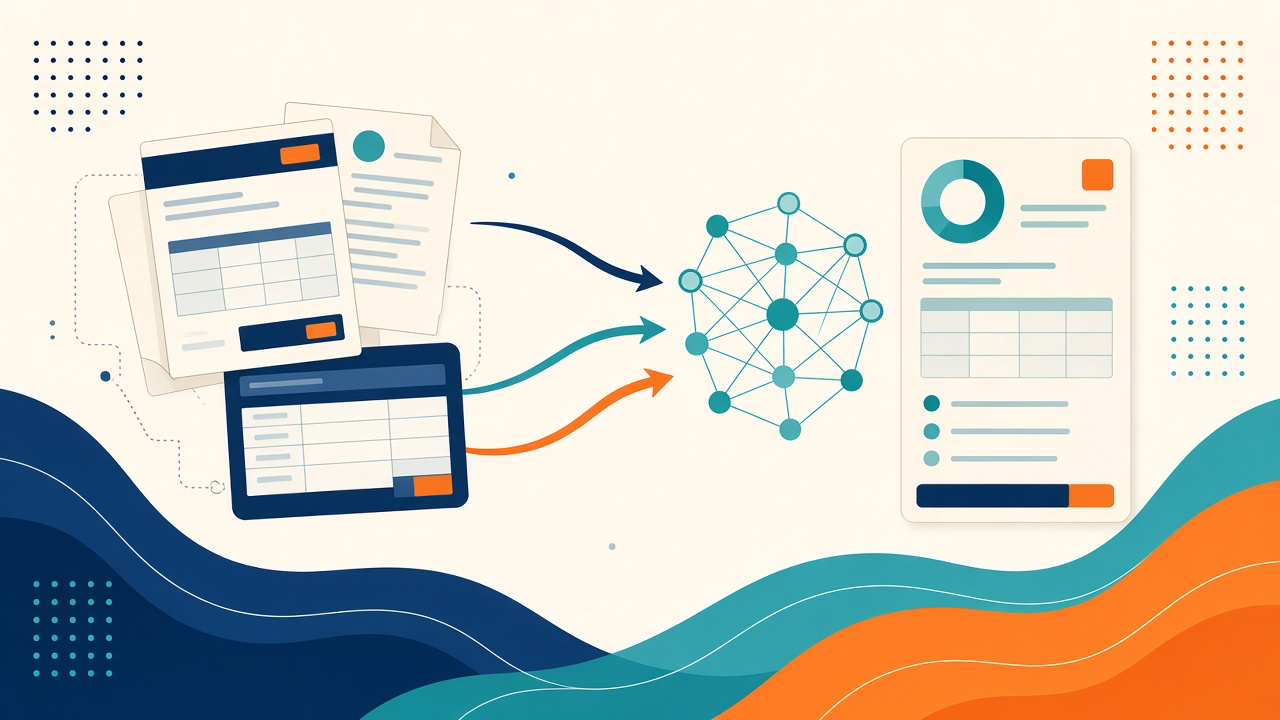
Generative AI is good at turning a messy pile of records into a paragraph a person can act on. It is a poor system of record. In financial operations, that distinction decides whether the tool saves a morning or creates a loss.
Use it to explain, draft, and route. Keep balances, postings, and customer-impacting decisions in deterministic systems with an audit trail.
Work It Can Take Off the Queue
Exception summaries. A reconciliation break, a failed payout, or a chargeback file becomes a short brief: what mismatched, which ids are involved, and which runbook applies. The analyst still confirms the numbers in the ledger.
Document first drafts. Dispute responses, internal incident notes, and “what we asked the partner” emails. A person sends them. The model does not.
Policy questions. “What does our refund rule say about partial captures?” answered from your approved documents, with a link to the source. If the source is missing, the answer should say so.
Support assist. Suggested replies grounded in the transaction timeline. The agent sees the suggestion and the underlying states. The customer does not receive model text that invents a refund.
Intake. Pulling fields from an invoice or a bank letter into a form an operator reviews. Extraction is a proposal, not a posted entry.
These tasks are high volume and low consequence if a human checks the output before anything moves.
Work It Should Not Own
- Posting a journal entry or moving funds
- Deciding a credit limit or an account freeze by itself
- Telling a customer a balance, a fee, or a settlement date from memory
- Approving a vendor or a trading partner
- Overwriting a ledger “because the explanation sounded right”
If the action changes money or a regulated decision, the system of record makes the change through existing controls. The model can prepare the case. It cannot close it alone.
A Safe Shape for the Workflow
Source records (ledger, tickets, provider payloads)
    ↓
Retrieve only the rows and policies for this case
    ↓
Model drafts a summary or a reply
    ↓
Show sources next to the draft
    ↓
Human accepts, edits, or discards
    ↓
Deterministic service performs any financial action
    ↓
Store the draft, the edit, and the actor
Ground the draft in retrieved records. A model that answers from general training data will invent reference numbers. Require citations the operator can click. If retrieval returns nothing, return nothing useful rather than a fluent guess.
Controls That Matter in Finance
Least data. Send the case, not the whole warehouse. Strip card data and anything the task does not need.
Tenant and role boundaries. A prompt must not become a way to read another customer’s ledger. Authorization stays in your API, before the model call.
Prompt injection. Invoices and emails are untrusted input. Treat them as data, not as instructions to the model.
Evaluation. Keep a set of real, anonymized cases with a known good summary. Run it when you change models or prompts. Track how often operators discard the draft.
Audit. Save input ids, model version, output, and who approved the next step. You will need this when a summary and the ledger disagree.
No silent tools. If the model can call an internal API, that API enforces the same permissions and idempotency as the UI. A chatbot is not a superuser.
Measuring Whether It Helped
Time-to-resolution on exceptions, percent of drafts sent with light edits, and the rate of corrections after the fact. A drop in handle time plus a rise in wrong payouts is a failed rollout. Watch both.
Conclusion
Generative AI belongs in financial operations as a drafting and explanation layer in front of systems that already know the numbers. Retrieve the case, show the source, and let a person approve anything that posts, pays, or promises a customer an outcome.
Connect With Us
At KIS Technology, we help businesses transform their ideas into secure and scalable digital solutions through software development, API integration, and quality engineering.
Build smarter. Build securely. Build for growth.
Connect with our Founder: