EDI Mapping: How to Design Reliable EDI Maps
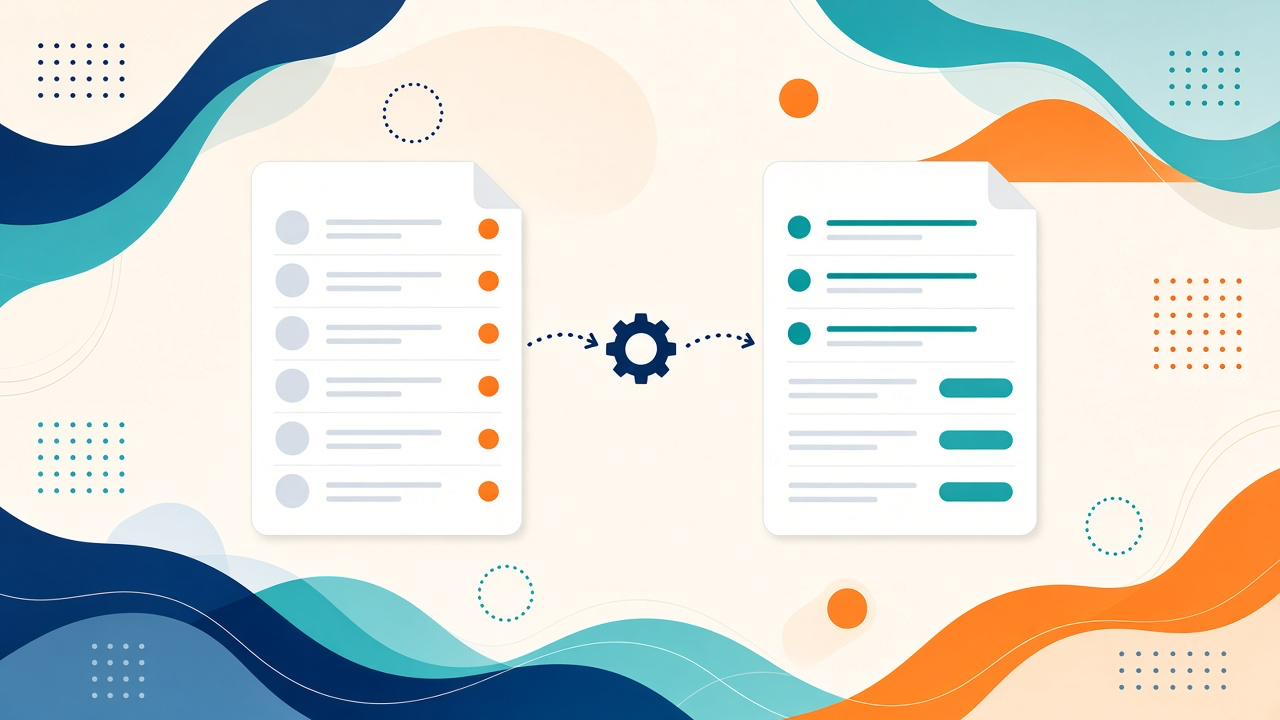
An EDI map is the contract between a partner’s file and your business objects. When the map is vague, every new trading partner becomes a production incident. When it is explicit, onboarding is a configuration change instead of a rewrite.
Reliable maps are designed. They are not a one-time spreadsheet that someone edits in a hurry the night before go-live.
What a Map Actually Does
A map translates structure and meaning:
- Structure: loops, segments, and elements (for example an X12 850 PO1 loop) become order lines, addresses, and dates in your system.
- Meaning: qualifiers and code lists (
N1*STship-to, unit-of-measure codes, tax codes) become the values your ERP understands. - Defaults and gaps: missing optional fields get a documented default, or the document is rejected. Silent guesses cause bad orders.
The map should not also be your business workflow. Acknowledgment rules, inventory checks, and credit holds belong in application logic, not buried inside a transform.
Start From a Canonical Model
Partner files differ. Your internal order, invoice, shipment, and remittance models should not.
A practical approach:
- Define a canonical document for each business transaction you support.
- Map partner EDI into that canonical model (inbound).
- Map the canonical model out to each partner’s spec (outbound).
- Keep partner quirks in the partner map, not in the core order service.
This is slower for the first partner and much faster for partner number fifty. It also gives QA one stable object to assert against.
Design Rules That Prevent Bad Maps
Name every field. “Misc text” is not a mapping note. Write the source element, the target field, the qualifier, and what happens when the value is absent.
Separate validation from transformation. Reject unknown sender IDs, missing required segments, and illegal dates before you create an order. A map that “best efforts” a broken file hides defects until the warehouse feels them.
Version the map with the partner. Partner A on 850 version 4010 and Partner B on 5010 should not share one mutable file. Store map version, spec version, and the date it went live.
Treat code lists as data. Unit of measure, carrier codes, and location identifiers change. Keep them in tables you can update without redeploying the whole integration.
Make loops explicit. Repeating addresses, allowances, and line items are where maps break. Document min/max repeats and which qualifier selects ship-to versus bill-to.
A Simple Map Lifecycle
Partner implementation guide
    ↓
Canonical field list + gap analysis
    ↓
Map + code lists + sample files
    ↓
Validation rules (reject vs default)
    ↓
Partner test (inbound and outbound)
    ↓
Versioned release + rollback
    ↓
Monitor rejects and unmapped elements
Sample files from the partner matter more than the PDF guide. Guides drift. Production files do not.
Testing a Map Before It Goes Live
- Happy path with a real partner sample
- Missing optional segments
- Repeated loops (multiple ship-tos, many line items)
- Unknown codes
- Dates, decimals, and implied decimals on quantities and prices
- Round trip: your outbound file parsed by the same rules you expect the partner to use
Keep the samples. The next defect will look like one of them.
Operating Maps After Go-Live
Maps rot when partners add a segment, change a qualifier, or send a new location code. Watch for:
- Rejects grouped by map version and partner
- Elements present in the file but never mapped
- A spike in manual order edits after a partner release
When a map changes, ship a new version. Do not overwrite the live map in place. You need the previous version to explain yesterday’s orders.
Conclusion
Reliable EDI maps are small, versioned, and boring on purpose. A canonical model, explicit validation, partner-specific code lists, and sample-based tests keep the next trading partner from becoming a custom project.
Connect With Us
At KIS Technology, we help businesses transform their ideas into secure and scalable digital solutions through software development, API integration, and quality engineering.
Build smarter. Build securely. Build for growth.
Connect with our Founder: