DPI Series: ONDC Explained — How India's Open Digital Commerce Network Works
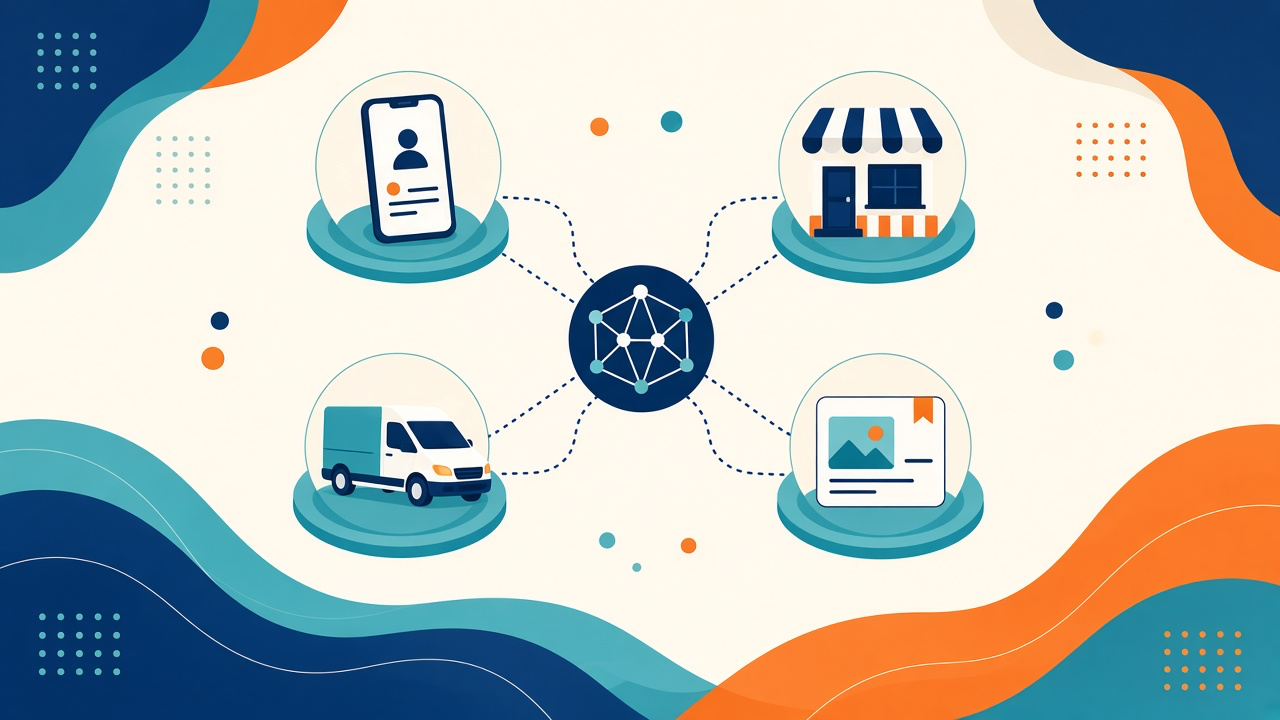
Most online shopping happens inside one company’s app. The catalog, the checkout, the delivery promise, and the customer relationship all sit with that marketplace. ONDC (Open Network for Digital Commerce) is India’s attempt to unbundle that stack so a buyer on one app can discover and buy from a seller who uses a different app.
For engineers, ONDC is an interoperability problem: shared message flows, clear roles, and no single platform that owns every order.
What Kind of Network It Is
ONDC is not a store you upload products into. It is a network of participants that speak a common protocol (built on the Beckn specification). Applications join the network in a role:
- Buyer apps face the customer: search, cart, checkout, order tracking
- Seller apps face the merchant: catalog, inventory, price, order acceptance
- Gateway helps a buyer app discover seller apps that can answer a search
- Logistics providers can be separate participants that fulfill delivery
The buyer does not need an account on each seller’s system. The seller does not need to list on every buyer app. The network carries the transaction between them.
How a Purchase Moves Across the Network
Buyer searches in a buyer app
    ↓
Buyer app asks the network (via gateway) which sellers can respond
    ↓
Seller apps return catalog offers
    ↓
Buyer selects an item and confirms
    ↓
Order is placed with the seller app
    ↓
Seller accepts, fulfills, or cancels
    ↓
Status flows back to the buyer app
    ↓
Logistics updates tracking when a logistics provider is in the flow
Each arrow is a signed, structured message, not a private API that only one marketplace understands. Timeouts, retries, and idempotency matter, because several independent systems participate in one order.
What Teams Integrate
If you are building a buyer app, you own the customer experience and you must handle search results from many sellers, price and availability that can change, and order states you do not fully control.
If you are building a seller app, you publish a catalog the network can query, accept or reject orders against live stock, and emit honest status updates. A stale catalog creates cancellations, and cancellations travel back to a buyer app you do not operate.
If you connect an existing store, the hard part is usually not the first “search” call. It is keeping price, stock, tax, and serviceability aligned, and mapping ONDC order states onto the states your OMS already uses.
Design Choices That Show Up in Production
- Catalog freshness. Decide how often offers are updated and what you do when stock hits zero mid-checkout.
- Identity and signing. Network messages are authenticated. Key management and request signing belong in the backend.
- Idempotent order creation. Retried confirmations must not create two orders.
- Partial failure. One seller in a multi-seller cart can accept while another rejects. The buyer app has to explain that clearly.
- Support across apps. The buyer complains in your app about a seller you do not run. You need the network order id, not only your internal id.
- Logistics as its own participant. Delivery promises and tracking may come from a provider that is neither you nor the seller.
How This Sits Next to Other DPI
Earlier posts in this series covered identity, payments, documents, and consented data. ONDC is the commerce rail: it standardizes how buyers and sellers find each other. Payments still happen through the usual payment systems. ONDC does not replace UPI or your payment gateway. It replaces the assumption that one marketplace must sit in the middle of every sale.
Conclusion
ONDC works when buyer apps, seller apps, and logistics providers exchange the same order lifecycle without a single platform owning the customer and the merchant. Build for signed messages, fresh catalogs, and idempotent orders. The storefront is only one side of the network.
Connect With Us
At KIS Technology, we help businesses transform their ideas into secure and scalable digital solutions through software development, API integration, and quality engineering.
Build smarter. Build securely. Build for growth.
Connect with our Founder: