Cloud Migration Strategy for FinTech Applications
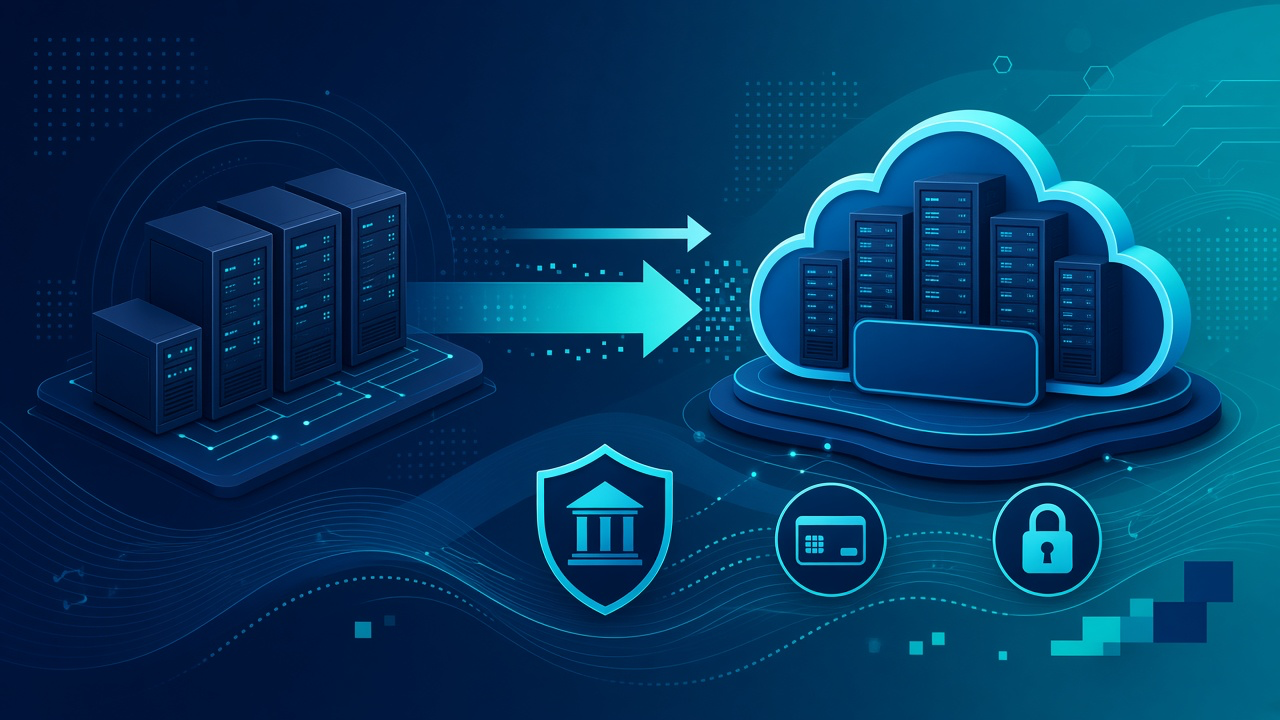
Moving a FinTech application to the cloud is not a lift-and-shift exercise. Payment systems carry money, identity, audit trails, and regulatory obligations. A good migration strategy protects uptime and customer trust while you modernize infrastructure.
Why FinTech Migration Is Different
FinTech workloads often include:
- High-volume transaction processing
- Strict audit and retention rules
- Sensitive PII and payment data
- Partner and bank integrations with fixed SLAs
- Reconciliation that must stay correct during cutover
If those constraints are ignored, teams may migrate servers but break settlement, reporting, or compliance controls.
Start With a Clear Target Architecture
Define what “done” means before you move the first service:
- Which workloads stay private, which go public cloud, and which stay hybrid
- How secrets, keys, and certificates are managed
- How logs, traces, and audit events stay immutable
- How environments separate production from lower stages
- Which services must meet PCI, SOC 2, or local regulatory controls
Write the target as a simple diagram: edge, API, services, data stores, jobs, observability, and identity.
Choose a Migration Pattern
Rehost
Move VMs or containers with minimal change. Fastest, but keeps old operational pain. Useful for a short bridge.
Replatform
Keep the app shape, but adopt managed databases, queues, and object storage. Good balance for many FinTech backends.
Refactor
Break monoliths into services, introduce event-driven ledgers, or redesign for autoscaling. Highest value, highest risk. Do this after critical payment paths are stable.
Most teams combine patterns: replatform the core ledger path, refactor non-critical modules later.
Sequence the Work
A practical order:
- Inventory systems, data stores, and third-party dependencies
- Classify data: public, internal, confidential, regulated
- Build cloud landing zone: accounts, networks, IAM, logging, backups
- Migrate non-critical services first
- Move read replicas and reporting
- Cut over write path and payment flows with a controlled plan
- Decommission old infrastructure only after reconciliation proves clean
Data Migration Without Losing Money Truth
Ledger and balance data need stronger care than content blogs or marketing CMS data.
- Prefer dual-write or CDC for a period if the business allows
- Freeze or throttle high-risk jobs during cutover windows
- Reconcile record counts, amounts, and checksums by day and by account
- Keep a rollback path for the ledger until the new system matches the old one
Never treat “migration finished” as success until finance ops confirms books match.
Security and Compliance Controls to Carry Across
- Encrypt data in transit and at rest with managed keys
- Keep key ownership clear; avoid ad-hoc shared credentials
- Preserve audit logs with retention and access controls
- Enforce least-privilege IAM for humans and services
- Test incident response on the new platform, not only on the old one
Cutover Options
Big bang: one switch window. Simple story, high blast radius.
Phased / strangler: route a slice of traffic or a product line first. Safer for payment platforms.
Blue/green: keep old and new live, flip the edge when health checks and reconciliation pass.
For FinTech, phased or blue/green usually beats a single risky weekend.
What Success Looks Like
A migration is successful when:
- Payments authorize and settle within SLA
- Reconciliation differences are explained and closed
- Support tickets do not spike for login, payout, or statement issues
- Cost and operability improve enough to justify the move
- Compliance evidence still exists and is easier to produce
Conclusion
Cloud migration for FinTech is a risk program as much as an infrastructure project. Start from the ledger and compliance edges, choose a pattern that matches your risk appetite, and prove correctness with reconciliation—not only with green deploy dashboards.
Connect With Us
At KIS Technology, we help businesses transform their ideas into secure and scalable digital solutions through software development, API integration, and quality engineering.
Build smarter. Build securely. Build for growth.
Connect with our Founder: