CI/CD for FinTech Applications: Challenges and Best Practices
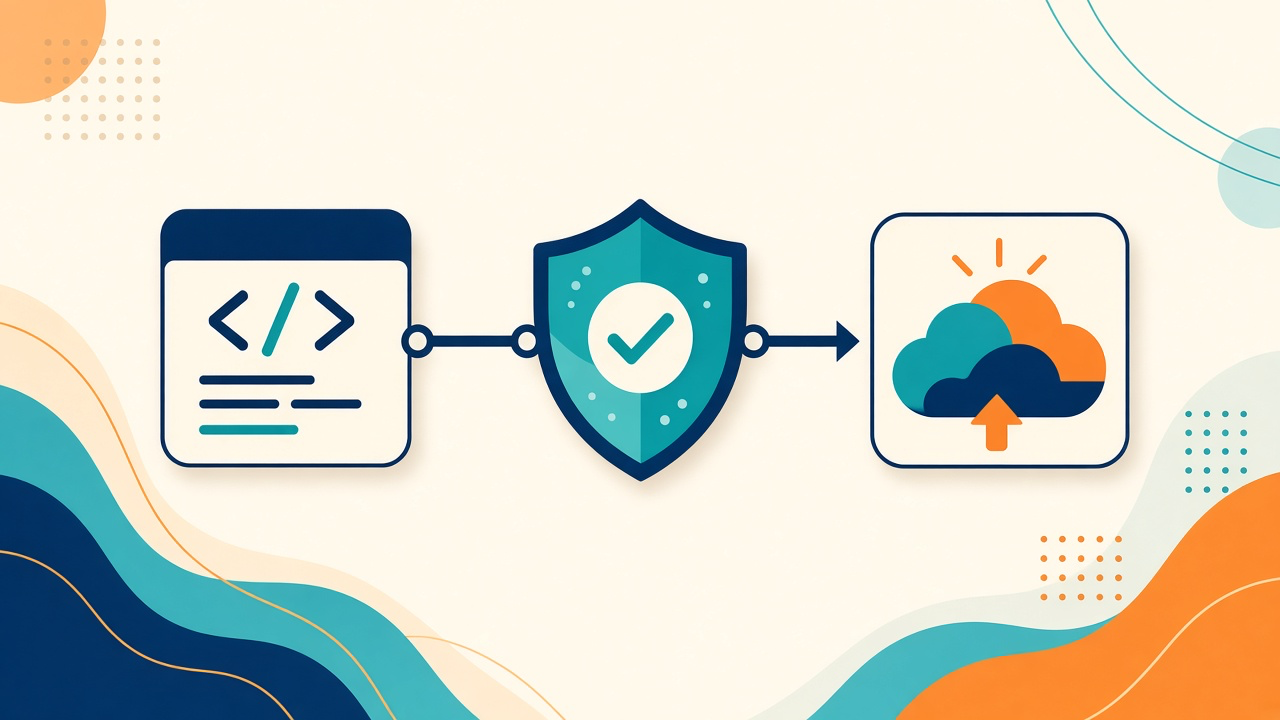
A standard pipeline builds, tests, and ships. A FinTech pipeline has to do that without double-charging a customer, running a migration that locks the ledger, or leaking a payment-provider secret into a log. The mechanics are the same. The release rules are stricter.
Why FinTech Pipelines Stall
Secrets. Gateway keys, bank certificates, and signing keys do not belong in the repo or in a shared CI variable named PROD_KEY that every job can print.
Data. Tests that hit a real processor, or a shared database with production rows, will eventually create a real side effect.
Migrations. A lock on a hot payments table during deploy is an outage even if the app “rolled out fine.”
Partial release. One service on the new contract and one on the old contract can mis-handle a webhook. Payment flows cross services. They do not roll out as a single binary.
Audit. Someone will ask who deployed the build that changed fee calculation, and which commit it was. “The pipeline did it” is not an answer.
A Pipeline That Fits the Risk
Pull request
    ↓
Build + unit tests + dependency and secret scan
    ↓
Integration tests against sandbox or stubs
    ↓
Artifact signed and stored (no rebuild on deploy)
    ↓
Deploy to staging with production-like config
    ↓
Migration dry run / expand step
    ↓
Production deploy with a small slice or a fast rollback
    ↓
Watch error rate, payment success, and ledger mismatches
Deploy the same artifact you tested. Rebuilding on the production job means you shipped something else.
Practices That Prevent the Usual Incidents
Separate credentials per environment. Sandbox keys in CI. Production keys only in the production deploy job, injected at runtime, never echoed. Rotate anything that appears in a log.
Stub the money path in CI. Contract-test your webhook handler and ledger client. Call the real sandbox in a scheduled job, not on every keystroke, and never with live cards.
Expand and contract schema changes. Add a column, deploy code that writes both, backfill, then remove the old path. A migration that rewrites the payments table in the deploy window needs a maintenance plan, not a surprise.
Backward-compatible releases. Webhook handlers accept the previous and the next payload for one release. Idempotency keys stay valid across the rollout so retries during deploy do not create a second charge.
Small production slices. Canary or a short blue-green cut, with an automatic halt if authorization success drops or ledger errors rise. Rollback is a tested command, not a document.
Protected production. A required review for production, and a lock during settlement windows if your business has them. Speed matters. An unreviewed fee change on a Friday matters more.
Traceable builds. Commit, build id, and deployer on the running version endpoint and in the audit log. When finance asks what changed, you can point at one artifact.
What to Measure After Deploy
Payment success rate, webhook failures, p95 latency, and ledger entries that do not match a provider reference. A green deploy step only means the process started. The next ten minutes of those signals decide whether it stays.
Keep a rollback note with the release: how to return to the previous artifact, and which migrations cannot be reversed. If a migration cannot be reversed, it does not ship in the same step as a risky code change.
Conclusion
CI/CD for FinTech is a normal pipeline with stricter rules around secrets, sandbox boundaries, expandable migrations, and a rollback you have actually used. Ship one tested artifact, watch the payment path, and make every production change attributable.
Connect With Us
At KIS Technology, we help businesses transform their ideas into secure and scalable digital solutions through software development, API integration, and quality engineering.
Build smarter. Build securely. Build for growth.
Connect with our Founder: