Building Reliable Payment Processing Systems
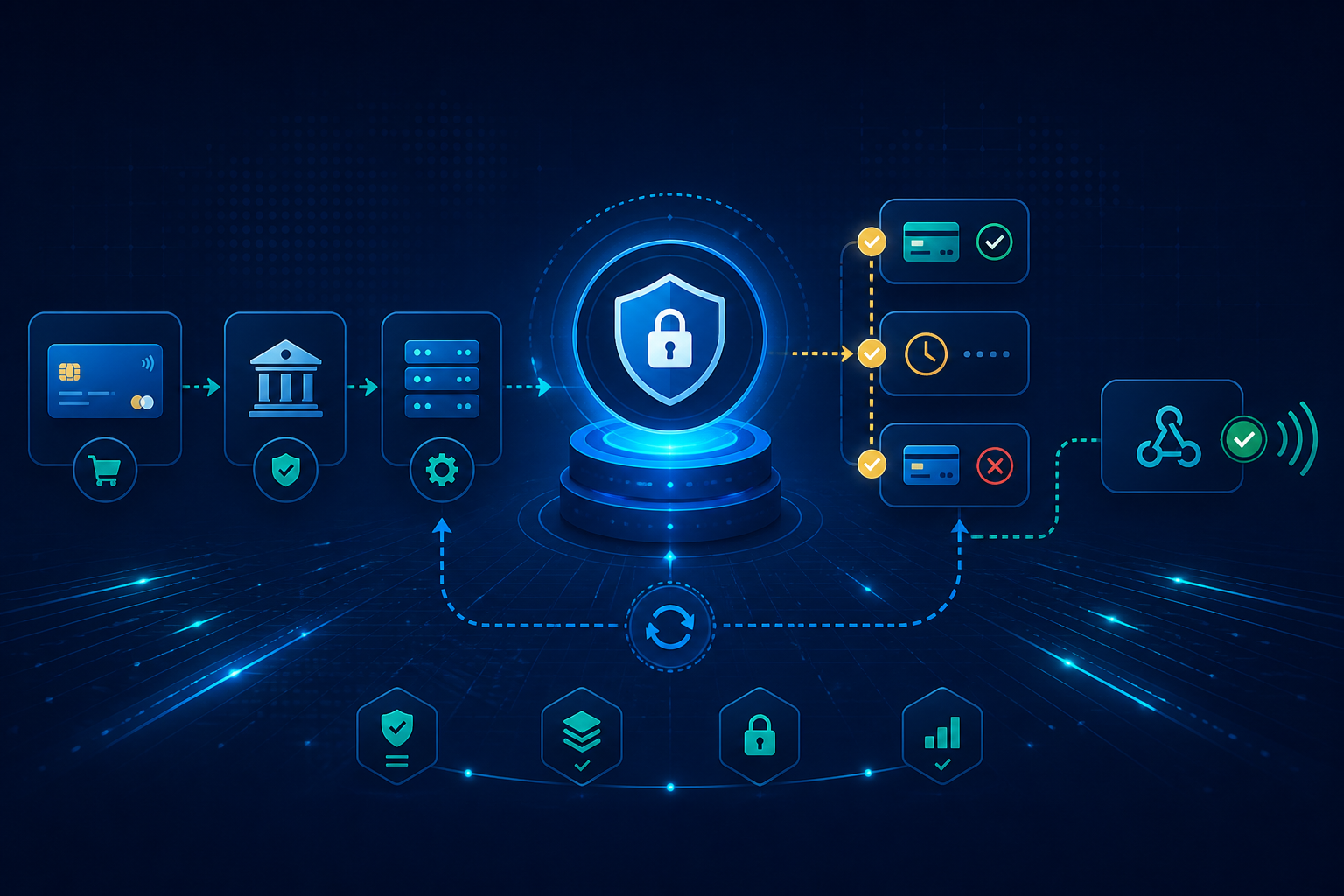
Reliable payment processing is one of the most important foundations of a successful FinTech platform. Whether users are making card payments, bank transfers, wallet transactions, or merchant settlements, they expect every payment to be fast, accurate, and secure.
Behind every successful payment, however, there is a complex backend workflow that must manage transaction states, provider responses, retries, reconciliation, and monitoring.
Why Payment Reliability Matters
In financial systems, even a small payment failure can create major business and customer problems.
A reliable payment processing system helps businesses:
- Reduce failed transactions
- Prevent duplicate charges
- Improve customer trust
- Support secure financial operations
- Simplify troubleshooting and auditability
For FinTech products, reliability is not just a technical goal. It is a core business requirement.
What a Payment Processing System Does
A payment processing system manages the full lifecycle of a payment from initiation to final resolution.
A typical flow may look like:
User
  ↓
Application
  ↓
Payment API
  ↓
Payment Gateway / Provider
  ↓
Bank / Financial Network
  ↓
Status Update
The system must track what happened at each stage and ensure the final transaction record is accurate.
Track Clear Payment States
Reliable payment systems should never treat payments as only successful or failed.
A payment may move through several states such as:
- Created
- Pending
- Processing
- Authorized
- Completed
- Failed
- Cancelled
- Refunded
This state-based approach helps the system react correctly when payment providers return delayed or partial responses.
Prevent Duplicate Charges with Idempotency
Duplicate payment processing is one of the most common and dangerous risks in FinTech systems.
This can happen when:
- A user clicks the payment button twice
- A mobile app retries after timeout
- The backend resends the same request
- A network error hides the original result
Using idempotency keys helps the platform detect repeated requests and return the original result instead of processing the same payment again.
This is essential for building trustworthy payment APIs.
Handle Retries Carefully
External payment services may fail temporarily because of:
- Provider downtime
- Network timeouts
- Rate limits
- Database issues
- Intermittent API errors
Retries can improve reliability, but they must be controlled.
Good retry design includes:
- Limited retry attempts
- Delay between retries
- Queue-based retry workflows
- Idempotency protection
Without these controls, retries can create inconsistent payment records or duplicate processing.
Use Webhooks for Final Status Updates
Many payment providers send webhooks when a transaction status changes.
For example, the first API response may return:
PENDING
Later, a webhook may confirm:
SUCCESS
This allows the backend to update the transaction after the provider completes processing.
Webhook handling should include:
- Signature verification
- Secure endpoint handling
- Retry-safe processing
- Audit logging
This helps ensure the platform only accepts trusted payment updates.
Reconciliation Is Essential
Even well-designed payment systems can experience mismatches between internal records and provider records.
For example:
- Your system shows
PENDING - The provider shows
SUCCESS
This may happen because of delayed webhooks, processing issues, or network interruptions.
A reconciliation process compares internal transaction records with provider-side records and helps identify mismatches that need correction or review.
Reconciliation is one of the most important controls in production payment systems.
Maintain Payment Audit Logs
Every payment system should keep detailed transaction logs.
Useful audit data includes:
- Transaction ID
- User reference
- Amount and currency
- Payment method
- Provider reference
- Current status
- Retry attempts
- Webhook events
- Timestamps
- Failure reasons
These logs help engineering, finance, and support teams investigate issues with full visibility.
Monitoring and Alerts
A reliable payment platform should continuously monitor operational health.
Important metrics may include:
- Payment success rate
- Failed payment rate
- Pending transaction count
- Average processing time
- Webhook failures
- Provider API errors
- Reconciliation mismatches
Real-time alerts can help teams respond quickly before a payment issue affects a large number of users.
Security in Payment Processing
Because payment systems handle sensitive financial information, security must be built into every layer.
Important security measures include:
- Secure API authentication
- Encryption of sensitive data
- Role-based access control
- Audit trail protection
- Provider signature validation
- Secure credential management
Reliable payment systems are not only accurate and scalable, but also secure by design.
Best Practices for Building Reliable Payment Systems
To build a stronger payment processing platform, businesses should focus on:
- Clear transaction state modeling
- Idempotent API design
- Controlled retry logic
- Secure webhook handling
- Reconciliation workflows
- Real-time monitoring
- Strong audit logging
These practices improve both customer experience and operational reliability.
Conclusion
Building reliable payment processing systems requires more than integrating a payment gateway. A strong FinTech platform must handle transaction states, retries, provider updates, reconciliation, and monitoring with precision.
When these components work together, businesses can create payment systems that are secure, scalable, and dependable in real-world financial operations.
Connect With Us
At KIS Technology, we help businesses transform their ideas into secure and scalable digital solutions through software development, API integration, and quality engineering.
Build smarter. Build securely. Build for growth.
Connect with our Founder: